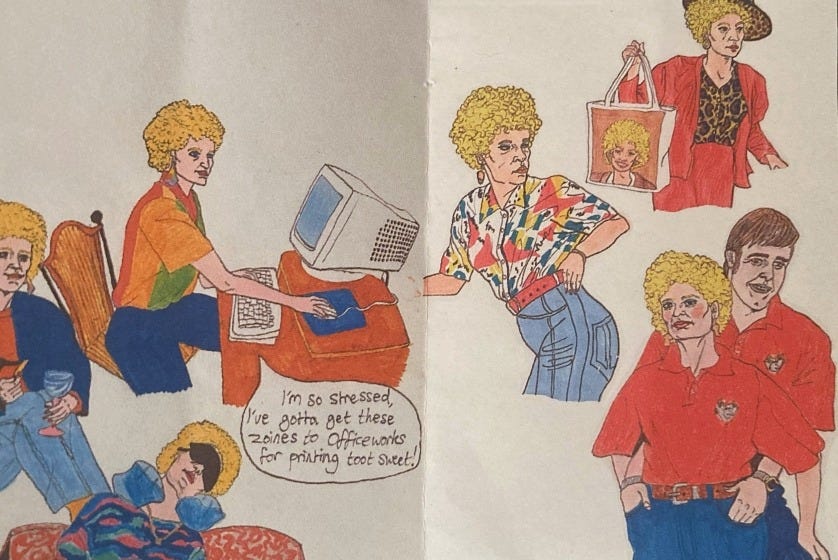
Detail from Fashion and Pashin’ The iconic outfits of Kath and Kim by Ziggy Filth
On the Saturday morning before last, I sold a bunch of old books at the local flea market and by afternoon I had a bumbag jingling with coins. It didn’t seem fun to put all profits towards bills and a shameful compulsion to fill reclaimed shelf-space hit immediately, so on Sunday I met a friend and did a few laps of Melbourne’s annual zine fair: The Festival of The Photocopier.
One thing about the zine fair is, no matter the venue, it’s always stinking hot. Sticky Institute organise the event and the event is sticky. Every time I attend, I find myself planning a zine printed on a jolly drink label, a fantasy of delivering cold carbonated beverages to the sweating masses. Has anyone ever frozen a zine inside a block of ice like an Azuma Makoto sculpture? It’s a logistically challenging idea but potentially very chic. Lack of chilled catering aside, I had a good time. All the stallholders seemed remarkably friendly and happy to chat about their publications. At a time when small book publishers seem resolved to mirror commercial approaches of the big five until they are engulfed, the range and quality of zines available were a tangible reminder of the advantages of staying small: Inclusive, responsive, hyper-specific and radical.
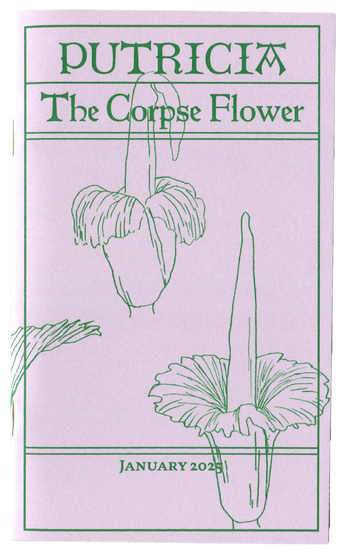
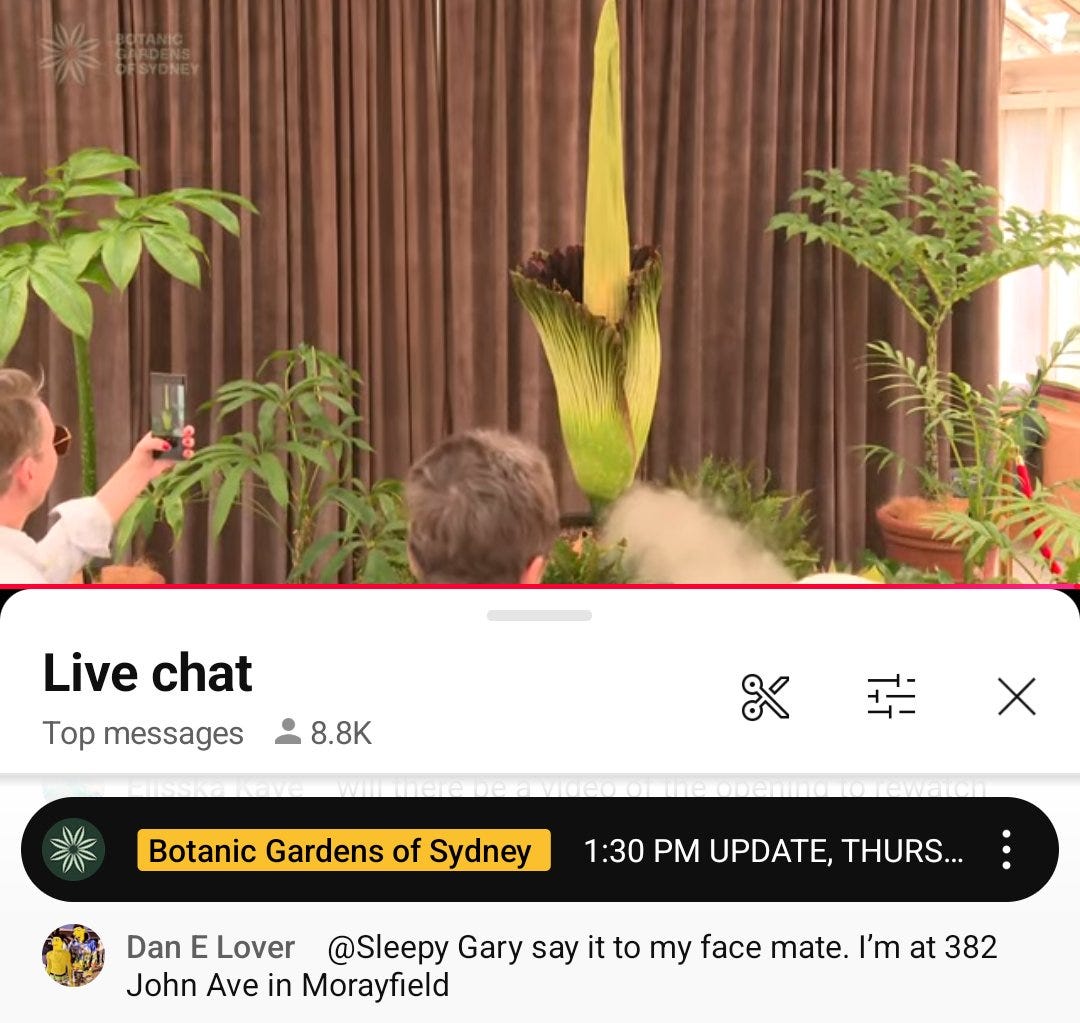
Nature themes were very prominent this year. I admired a lovely selection of fungi publications at the Milton Mushrooms table and skimmed a more humbly produced zine about growing potatoes. Goodnight Press had two zines celebrating Putricia, Sydney’s recently bllomimg corpse flower: One is a profile of the plant and chronicle of the blooming event, and in a second zine twelve artists pay tribute to the plant.
.
Additional top teir Putricia content from the livestream.
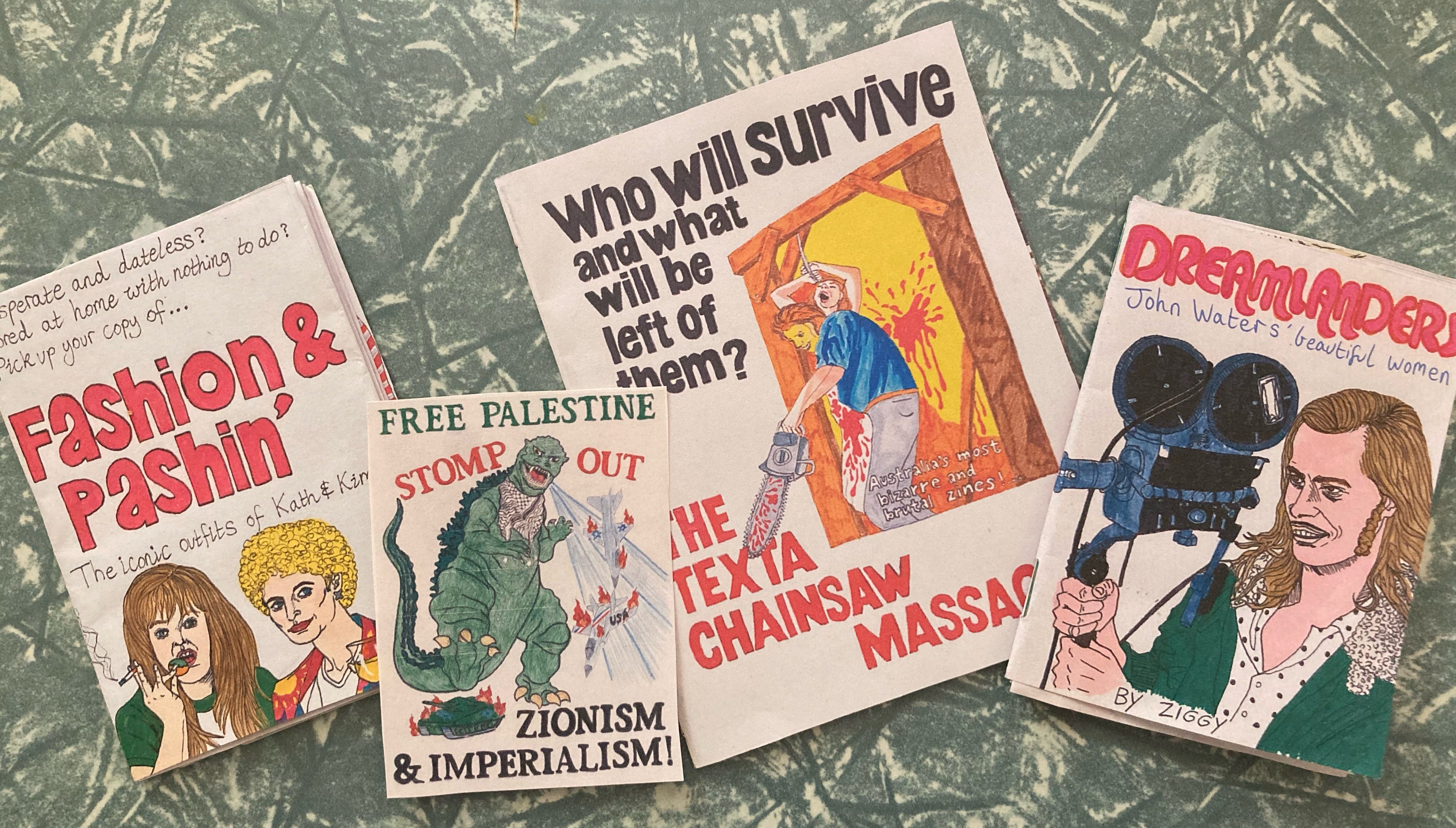
A puzzle-zine stall holder asked if I liked puzzles. I said no because I don’t, although I felt sure that many other people would be enthusiastic about this idea. Aware that I’m very much alone in being a puzzle hater, I was genuinely surprised I hadn’t previously encountered puzzle zines.I do pick up a small zine about the Melbourne train network. It’s a little disappointing though, leaving plenty of room for better, more exciting train zines that I hope someone will be inclined to make. Tiny zines of bathroom graffiti and fantasy/wishlist emojis were scattered over a table like little trinkets or talismans. I bought a handful of charming, fun texta-illustrated zines by Ziggy Filth: One featured drawings of women from John Waters films, another horror movie scenes and another Kath and Kim fits. These will be perfect to include when sending mail to overseas friends.
Various zines by ZIggy Filth
Surprisingly, despite poetry feeling prevalent lately in the big wide world, I didn’t encounter any of it at the zine fair. I checked the stallholder guide on the website in case it’s been prohibited but instead learned that incense is banned. No stranger to a zine fair organising committee I find it amusing to imagine a specific incident that may have led to this rule. Poetry seems to have a green light from the organisers so perhaps I just avoided it instinctively. I didn’t see a lot of music zines either. I recall seeing one about The Beach Boys but after the event I struggled to remember any others. Surely there was more. There were a lot of stalls, and I certainly missed some good stuff.
Bad Books had an extremely cool logo and an image-based roadside religion zine on offer that I couldn’t leave behind. From the Bad Books table I also picked up a copy of Revenge a short story by Clem Edwards wherein water ferrets go loony tunes mode on a park ranger. The zine is riso-printed, designed and bound beautifully, and illustrated with geographic photos by Joe Miranda.
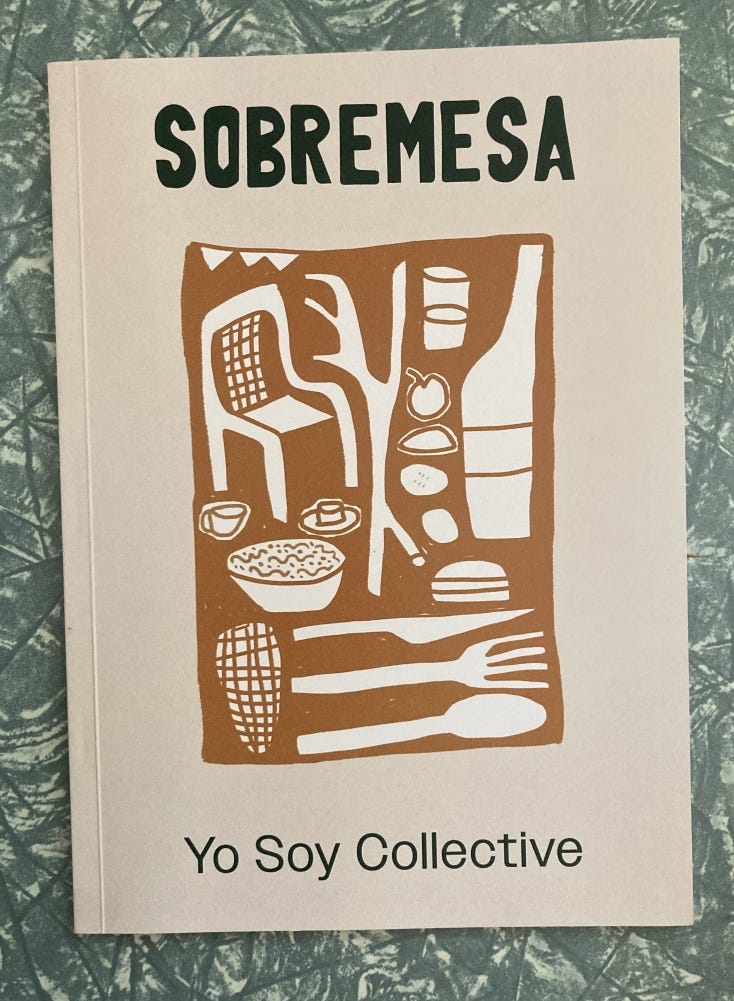
I was excited to pick up a copy of Sobremesa. A community cookbook / food themed publication by Yo Soy Collective. Sobremesa, I learn, is a word referring to the time spent at the table after eating, relaxing and sharing Yo Soy Collective is an arts group that works to build community, celebrate culture and uplift Latin American creatives.
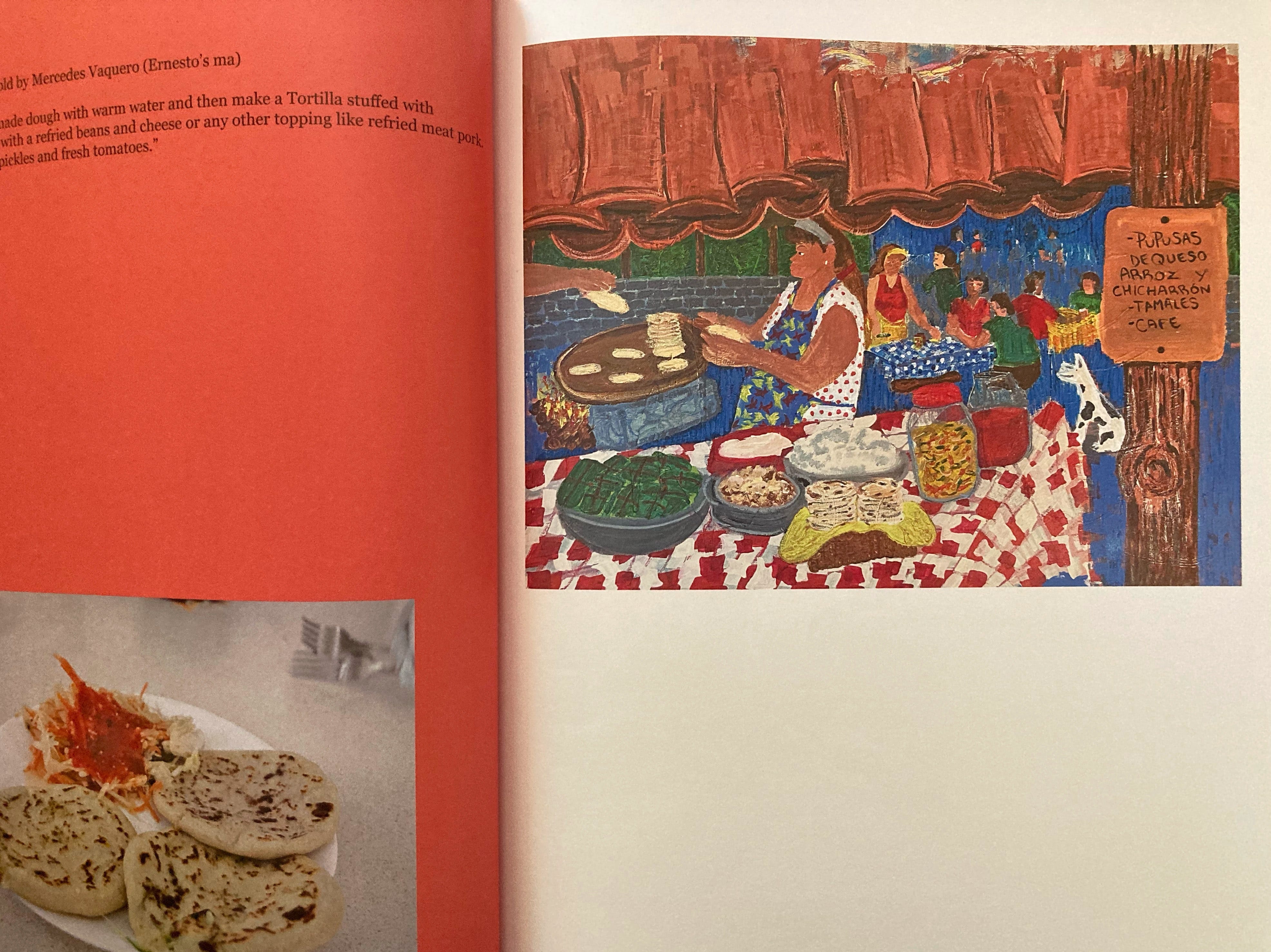
I love a community cookbook, and as is pointed out in Sobremesa’s introduction “there is little record of Latin American recipes and stories of migration from a so-called Australian perspective, despite there being a vibrant community here” The book includes 9 recipes, and features writing and art from a variety of contributors. I was very interested to read about the food experiences of a Chilean-Syrian family. Alongside an essay, Polly Sará has contributed recipes for a Chilean cake Torta Milhojas, and for Rellenos, or Ma’shi Kousa, a middle eastern stuffed zucchini dish. There is a recipe for tejuino, contributed by Jousue Alejandro Valenzuela Zazueta. It’s an ancient, fermented corn based drink from Mexico and uses piloncillo as the sugar component, an ingredient that was ‘til now unfamiliar to me. I’m not in love with the format, it’s A4 and the binding isn’t exactly kitchen friendly but that’s really beside the point;, the contributions are varied and interesting and I love the inclusion of art in addition to photos. The recipe for Masa tortillas is delivered simply as a 3 line sentence, as told by Ernesto Tomas Vaquero’s ma, it’s accompanied by a colourful painting of tortillas being made and eaten.
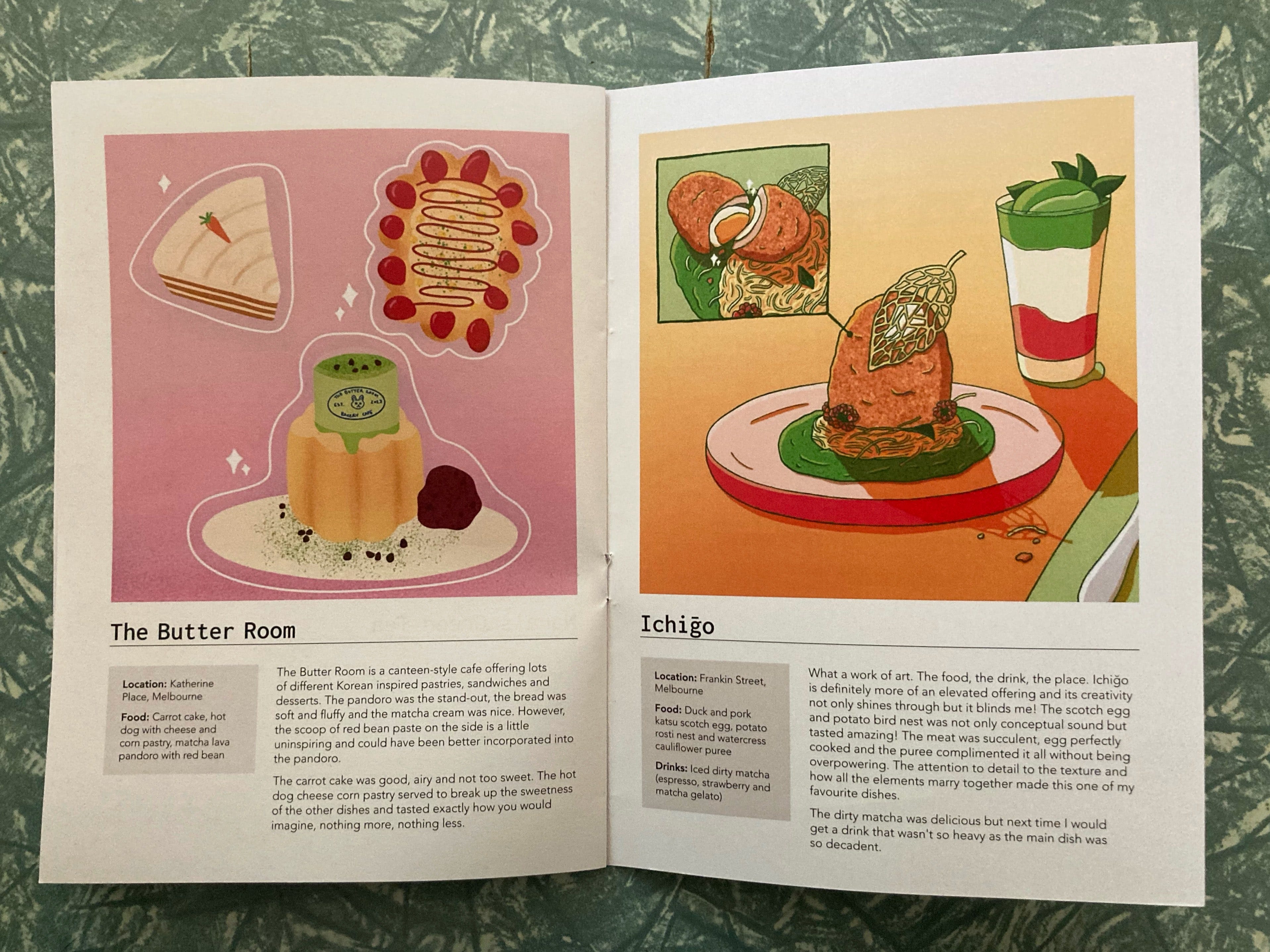
Illustrator JJ Tsan’s table was home to many stylish food related things including a cookbook zine titled There’s Food at Home. The cute Yum Cha stickers and zine were hard to resist but I decided to take home Eating Adventures; an illustrated zine featuring 6 illustrated reviews of Asian-inspired Melbourne cafes, freshly printed for the zine fair. Karé, a cafe specialising in Japanese curry, was already on my list of places to try, but I wasn’t aware of the Korean cafe called the Butter room, which sounds like a hangout well-suited to me. The reviews are genuine; honest rather than fawning and I’m sure the chefs who construct parfaits and plate meals with great care would be thrilled to see their work illustrated so nicely.
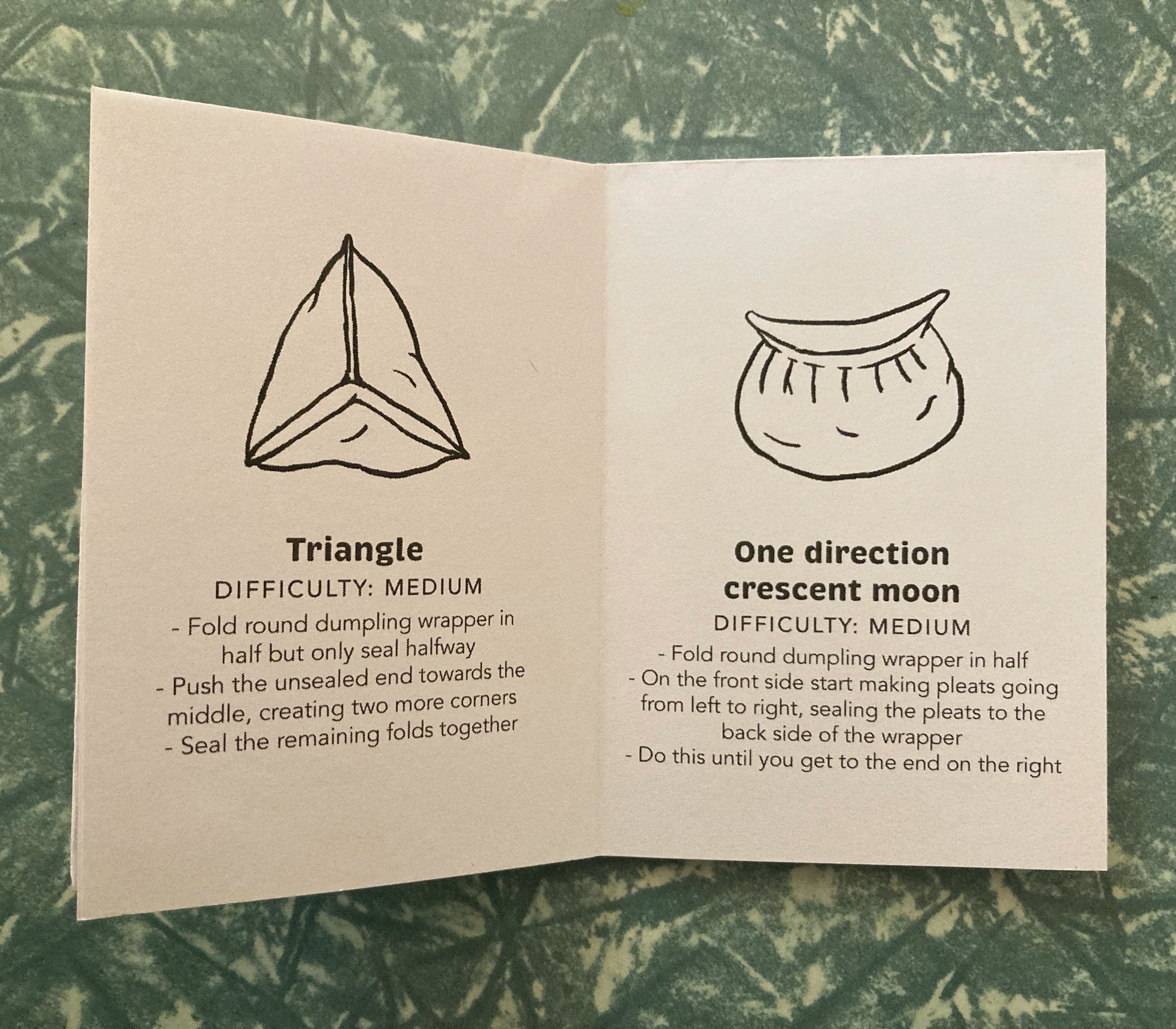
I always like a very simple zine about something quite specific, so I also walk away with a copy of 6 Ways to Fold Dumplings a classic A4 to 8 page fold format which has an illustration, instruction and difficulty rating for a dumpling fold style on each page.
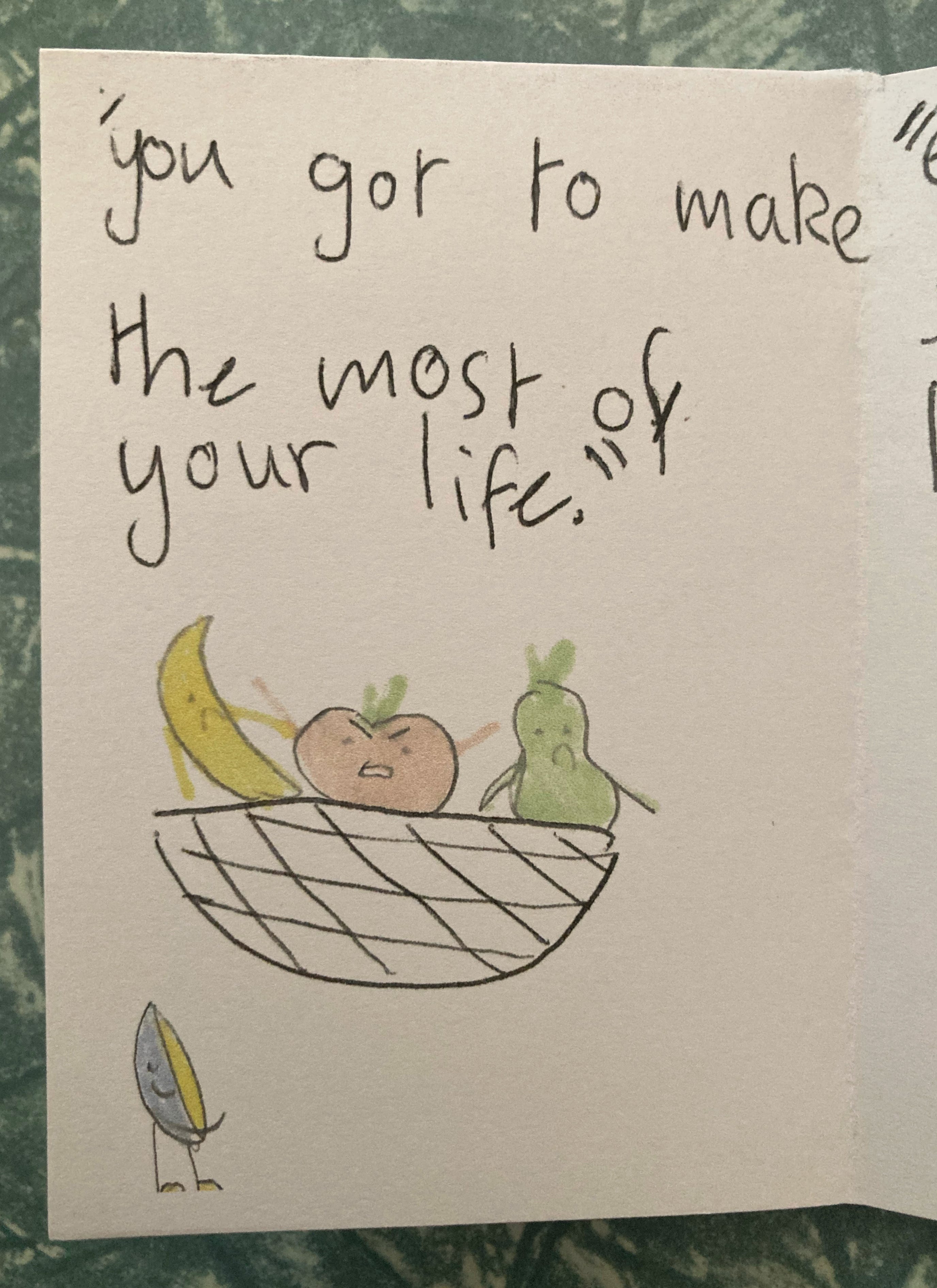
Two small zines were sold to me by a pair of nine-year-olds. They both had a few different titles on offer so naturally I chose the ones relating to food. I can’t remember their names and the zines don’t list their authors, so I am sadly unable to credit them here, I promise I never gatekeep deliberately!
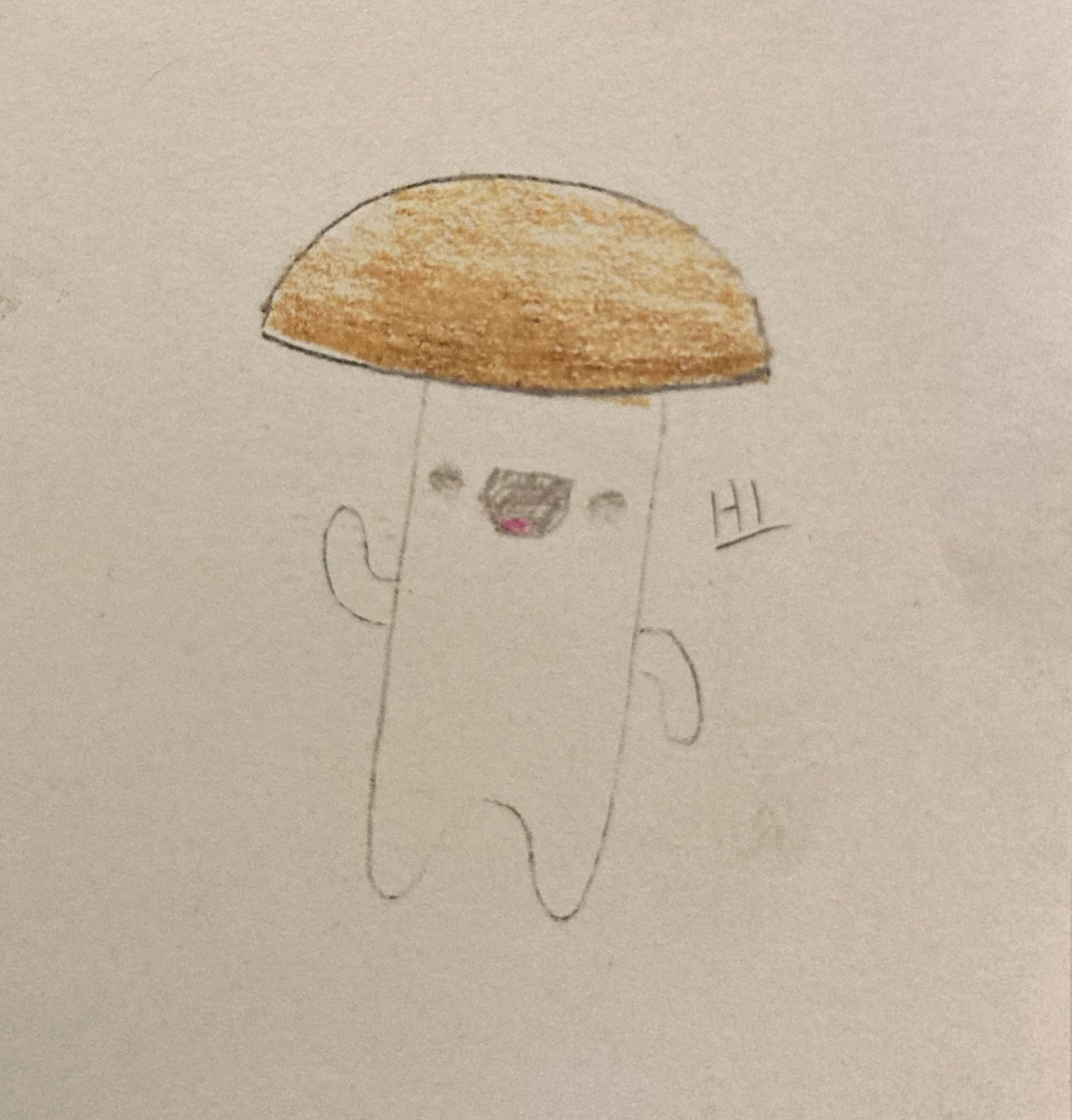
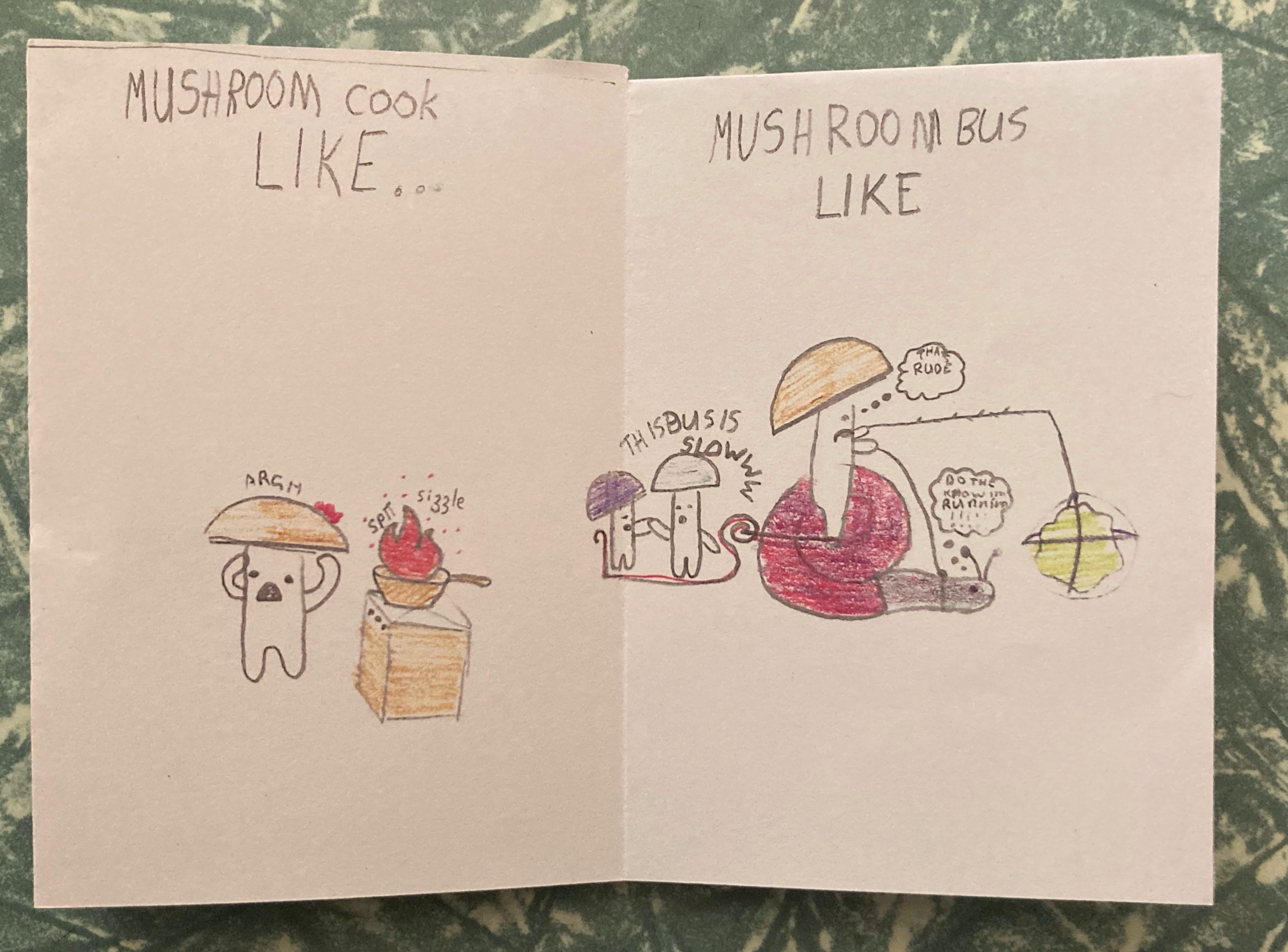
I go crazy for anthropomorphic food and The Walking Passionfruit is a 7-page hero’s journey about a passionfruit boldly leaving the fruit bowl for an adventure to the other side of the kitchen. Inspirational. Perhaps the highlight of my day though, is Mushroom Like. This is a small zine with each page depicting how a mushroom would go about doing something. It’s clever and hilarious. Oil spits from a pan onto the mushroom’s cap as it cooks. On the Mushroom at the zoo page, the mushroom looks up, unable to see the giraffe licking the cap that shades its stalk. Five stars. Ten out of ten. $2 very well spent.
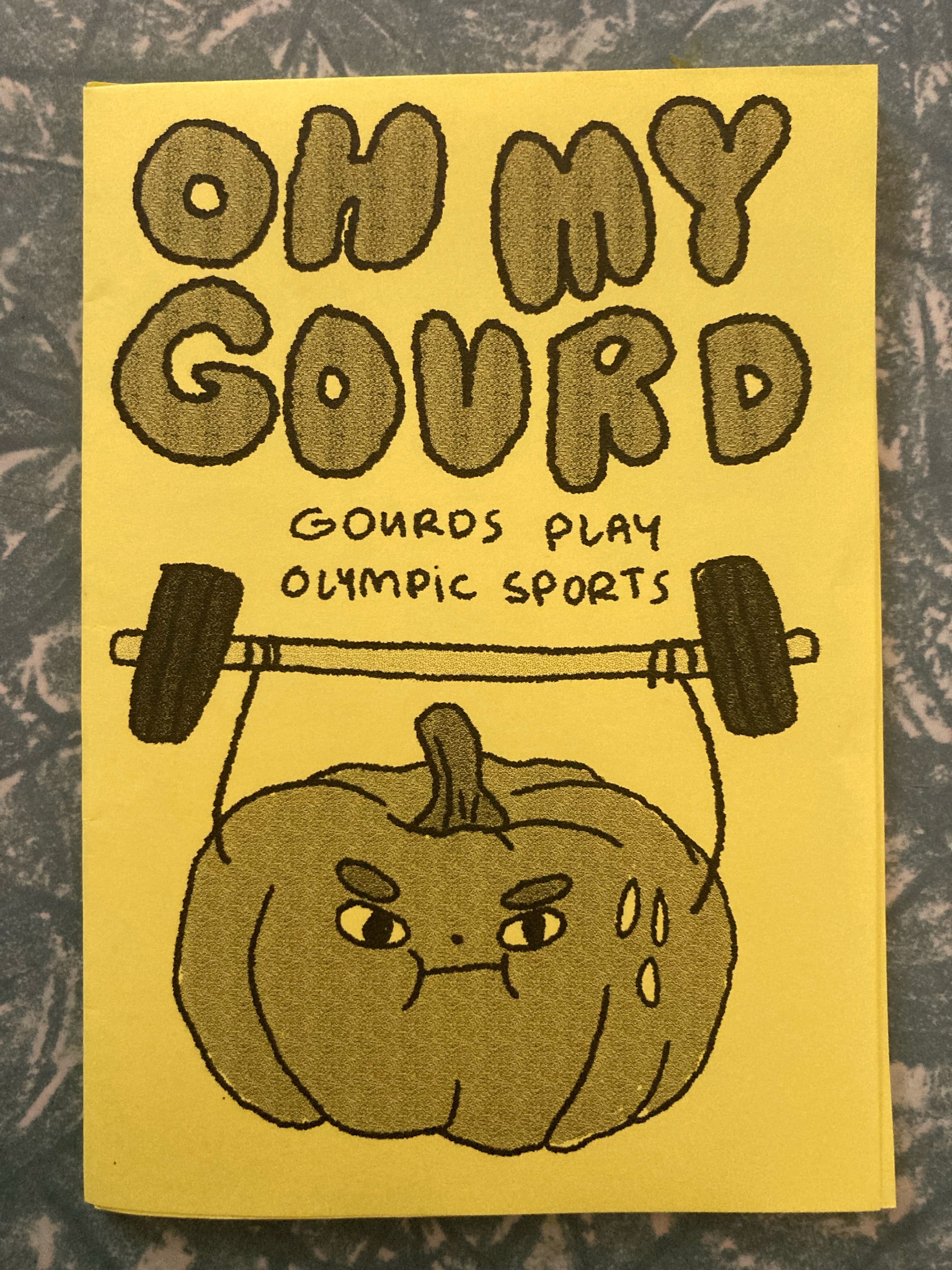
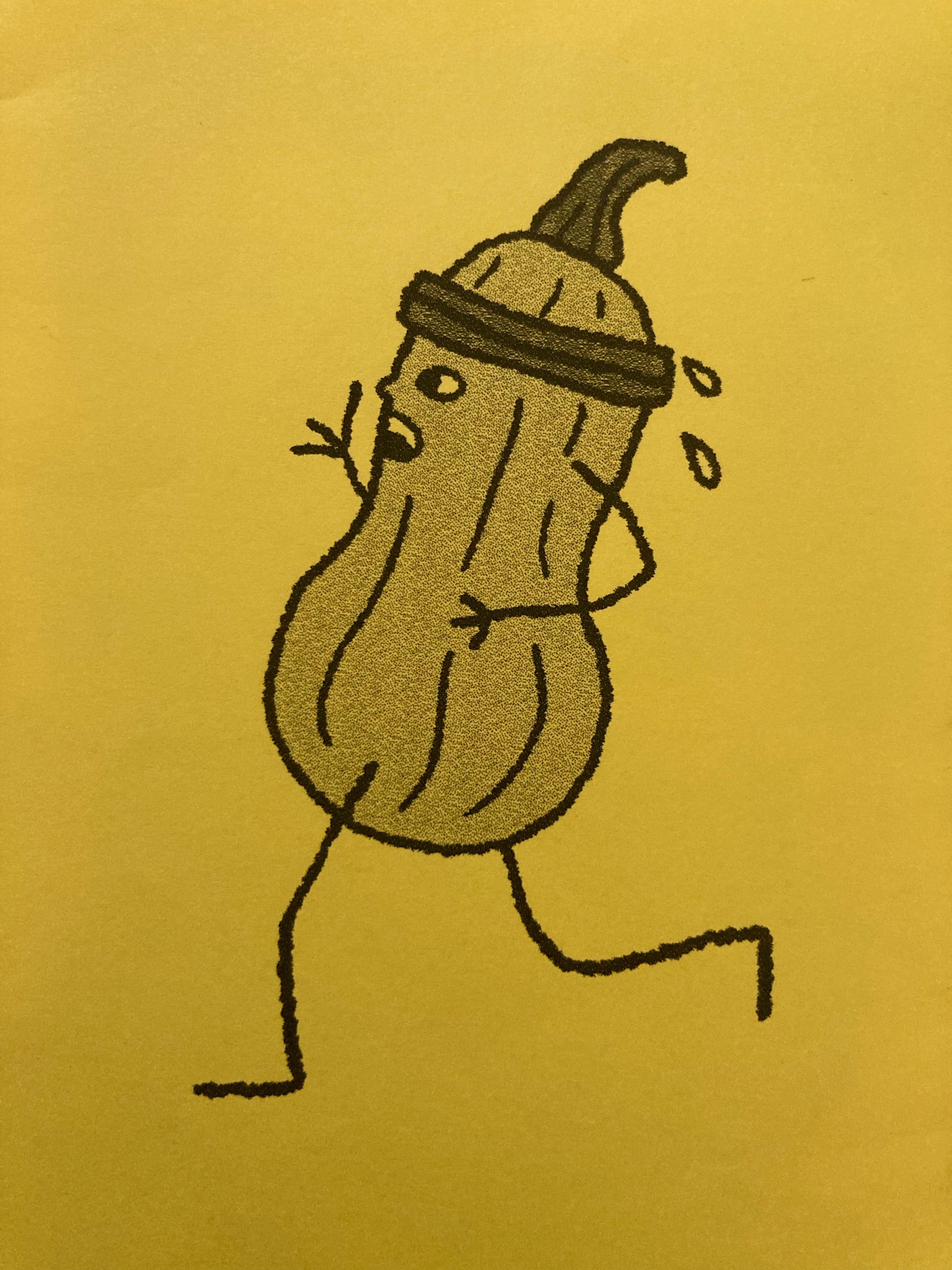
Oh My Gourd: Gourd’s Play Olympic Sports explores strikingly similar territory. Instead of “Mushroom ____ like” this zine announces “Gourds play sports like”. While objecting to a lot of surrounding bullshit I am a huge on the Olympics. Every four years for two weeks I become an insufferable expert. My expert opinion on this zine is that the gourds are perfectly matched to the sports. Of course a pumpkin would be weightlifting. The bottle gourd was born to golf. This joyful well-executed zine is by Bridget Melville.
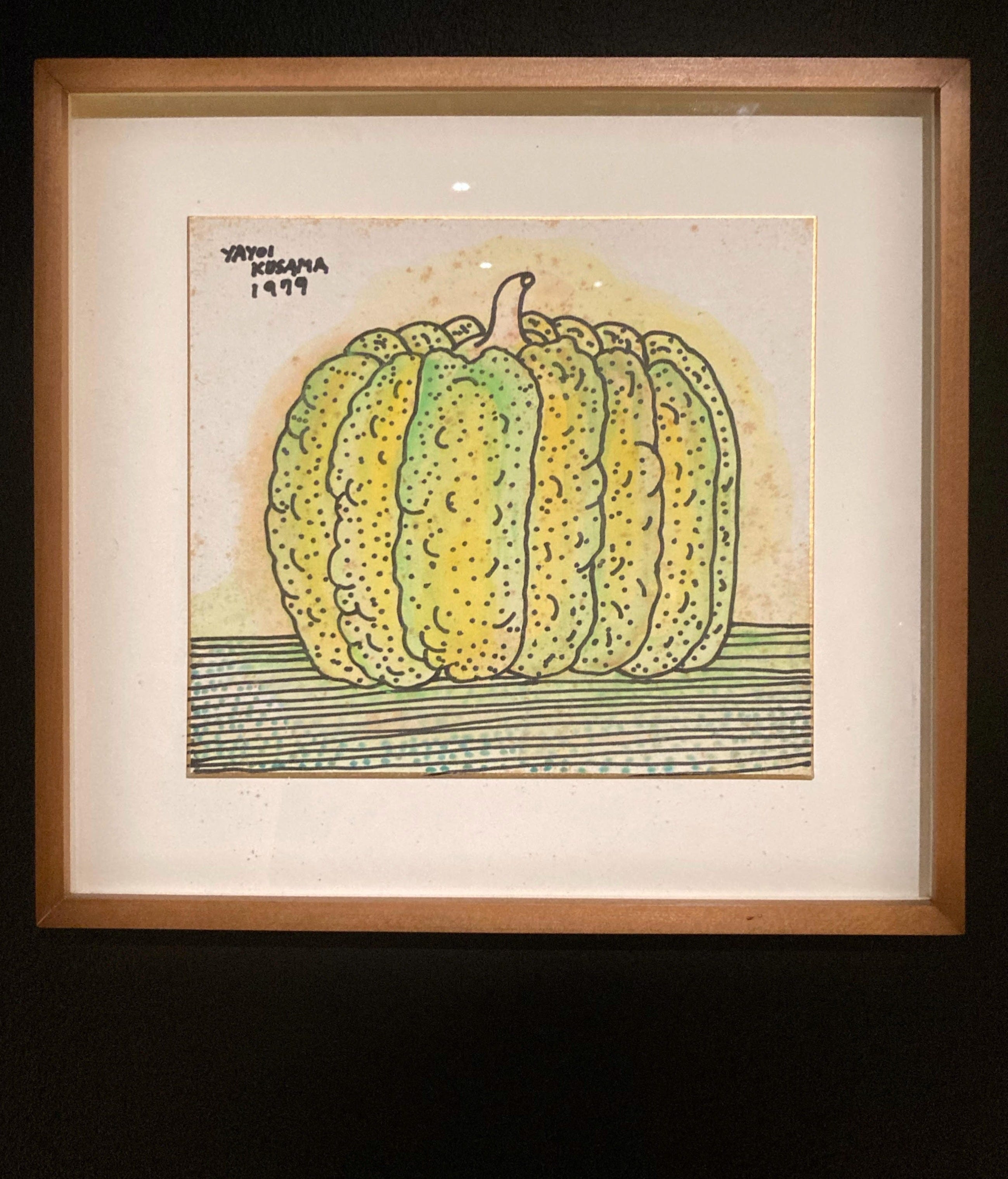
ON PUMPKINS Yayoi Kusama
Pumpkins are lovable and their wonderfully wild and humorous atmosphere never ceases to capture the hearts of people. I adore pumpkins. As my spiritual home since childhood, and with their infinite spirituality, they contribute to the peace of mankind across the world and to the celebration of humanity. And by doing so, they make me feel at peace. Pumpkins bring about poetic peace in my mind. Pumpkins talk to me. Pumpkins, Pumpkins, Pumpkins. Giving off an aura of my sacred mental state, they embody a base for the joy of living, a living shared by all of humankind on the earth. It is for the pumpkins that I keep on going.
Yayoi Kusama (Infinity Net: The Autobiography of Yayoi Kusama, 2011)
If you have been keen and courageous enough to join the crowds and visit the Yayoi Kusama exhibition currently on at the NGV you will have encountered various pumpkin works from throughout Kusama’s career. It’s easy to be cynical about this sort of blockbuster exhibition at the big gallery: There’s an absurdity and frustration that comes with experiencing art in the same sort of environment that one might endure airport security. My mum was visiting from out of town though, so a few days after the zine fair I was at the NGV trying to remain calm as I again considered the enduring appeal and character of pumpkins. Kusama’s art has become highly recognisable over the past few decades, the commercial collaborations are bold and numerous. I’m cautious about referring to the work as universal. Hippie style catchphrases like LOVE FOREVER should always be taken with a grain of salt and as far as I can tell the NGV have decided not to acknowledge Kusama’s historic racism. The appeal is undeniably broad though; each time I’ve attended a Kusama exhibition I’ve done so alongside people of all ages. I don’t particularly connect with the mirror room works on this occasion, but I truly enjoy my time with the pumpkins. I find them calming to look at, and I completely understand Kusama’s remarks about pumpkins bringing peace. Like Kusama I’m no stranger to OCD and her pumpkins remind me that cooking can be soothing in ways similar to painting. Reading the names of her paintings it’s clear that Kusama’s struggles have persisted regardless of her success; Pain of Love Lost, and a Wish to Commit Suicide (2009) The Urge to Die Comes on a Daily Basis. Hoping That You Come across My Death (2014). For Kusama to survive and be making art aged 95 is remarkable and must in part due to the work. When it comes to wellbeing whatever works is whatever works. Kusama doing pumpkins for 40+ years has worked.
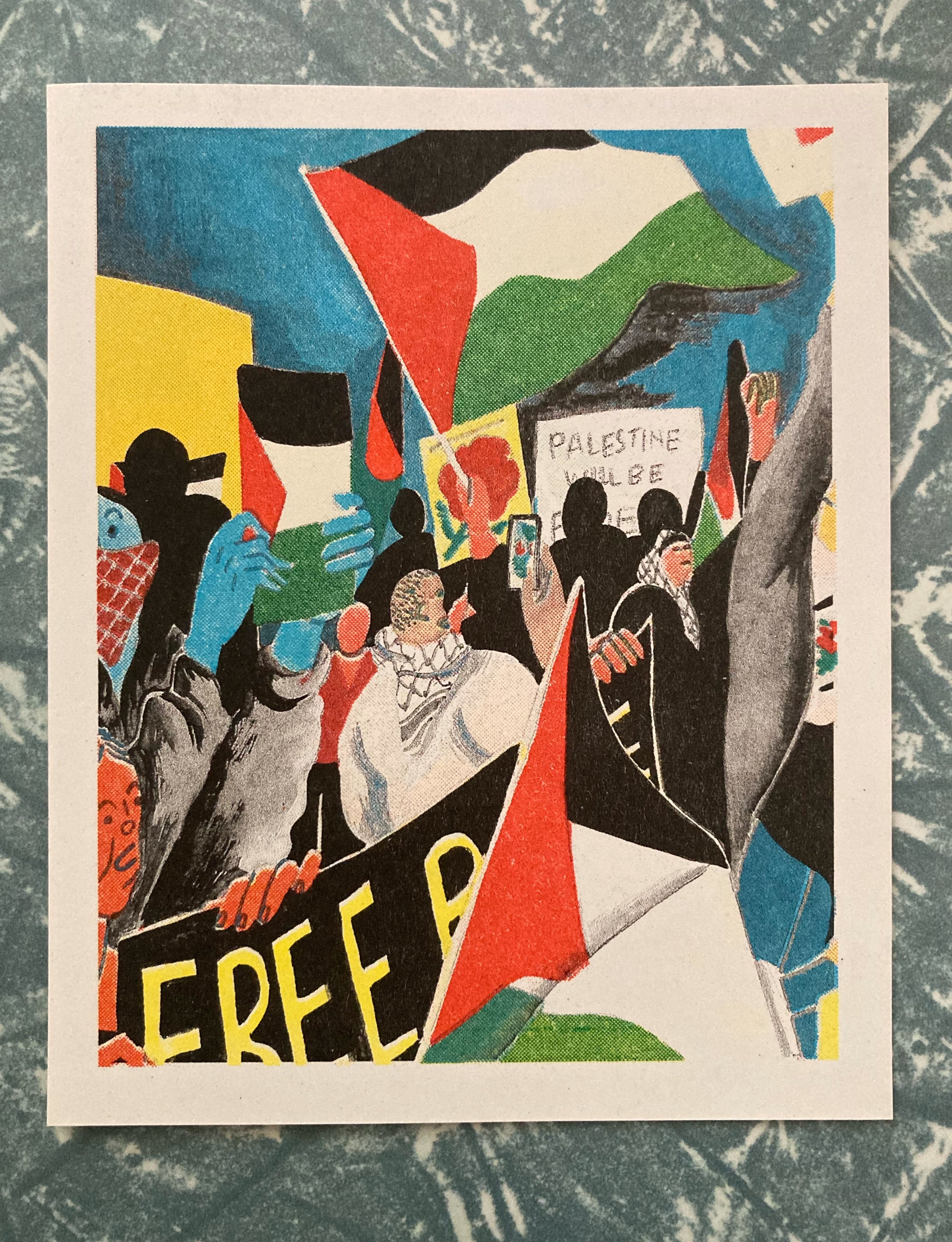
Back to the zine fair reporting, though, Palestine was a common thread, with many stalls fundraising, offering stickers, prints and publications in solidarity. The above print, a stunning protest scene, by Tommi Parrish was printed as an insert for their recent zine. Extra copies were given away at Glom Press stall.
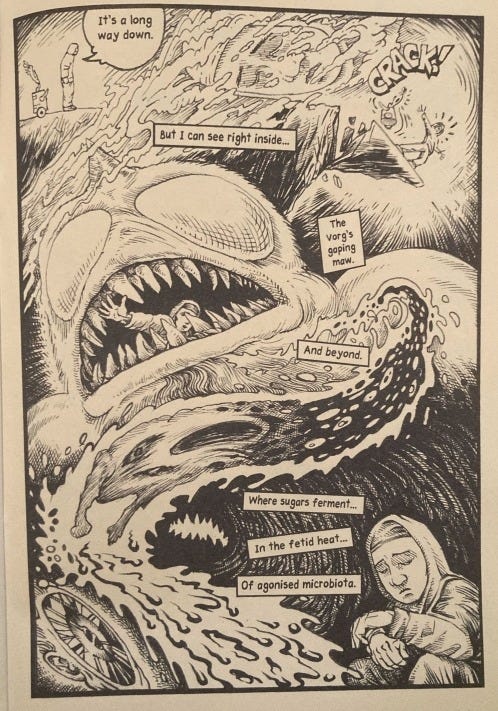
Glom Press are a quality comics publisher and risograph press worth paying attention to. They are currently publishing a group of new serialised comics and had these available at the fair, including the first two instalments of Safdar Ahmed’s comic Space Jihad. I purchase the first volume; It’s an adventure story in which Huda Munawar, roaming through space, winds up scrapping with a bunch of weirdo-conservative slug-like creatures that seem to be real jerks.
Ahmed was a founder of the Refugee Art Project and his acclaimed first book was Still Alive: Notes from Australia's Immigration Detention System. It was published in Australia by Twelve Panels Press, an international edition published by Fantagraphics followed in November 2022. On the back of Space Jihad Huda is depicted with a speech bubble that reads “Fuck racism, occupation and apartheid” on the inside cover an acknowledgement of support from Creative Australia. It’s a combo that captures-my attention given the events of the week.
“Over the years these stories have become known, the inhumanity enacted by Australia’s approach to migrants should have been taken as a warning; instead, it was adopted as a case study”
Just before the zine fair it was announced that Lebanese-Australian artist Khaled Sabsabi would be representing Australia at the Venice Biennale, with Michael Dagostino joining him as curator. A few days later Murdoch/News Corp owned newspaper The Australian published a column criticising Sabsabi. The column cited a work from 2007 which depicts now-deceased Hezbollah leader Hassan Nasrallah. Another two days passed and Creative Australia announced that the team had been dropped. This is of course disgraceful, blatant racism and Sabsabi’s work has been deliberately misrepresented by media and politicians. This saga is not really about the work at all though. In 2022 Sabsabi was one of 20 or so acts that withdrew from the Sydney Festival because of a sponsorship deal by the Israeli Embassy. It seems clear this is about Palestine. It’s a gutless meltdown, one of many that we have witnessed, as arts organisations and institutions crumble in the face of pressure from zionist lobby groups and rotten media. All of this was occurring at the same time as Antoinette Lattouf’s captivating unlawful termination case played out in court and I spent a huge amount of time reading and thinking about these events while putting together this post. Creative Australia’s abandonment of Sabsabi illustrates the potential pitfalls of being funded by government bodies or corporates with political agendas and obligations.
There was immediate fallout following the decision to rescind Sabsabi’s selection. All other biennale shortlisted artists were quick to condemn the decision, request re-instatement and clarify they would not be willing to sub in. An open letter published by arts journal Memo Review demands transparency from Creative Australia and details how the arts community is losing faith in the organisation. Signed by thousands of artists and arts workers the letter falls short in that it doesn’t acknowledge the racism of mischaracterising Sabsabi’s work. Nor does it touch on the fact that protests opposing the genocide that Israel is perpetrating, and expressionsof anti-zionist viewpoints, have been frequently and aggressively equated with antisemitism by politicians and media in Australia. It is this that has enabled the current climate of censorship.
Think of a bead necklace. The beads on their own may be lovely, but when they’re threaded together, they’re not really free to skitter around as they please. When you look around and see how many NGOs are on, say, the Gates, Rockefeller or Ford Foundation’s handout list, there has to be something wrong, right? They turn potential radicals into receivers of their largesse – and then, very subtly, without appearing to – they circumscribe the boundaries of radical politics.
Arundhati Roy
The above quote from Arundhati Roy was shared in the days after Sabsabi was dropped. To reject all funding and support from such bodies is hardly a practical path forward. We are undoubtedly better to have works like Space Jihad published with support from Creative Australia if the alternative is the work remaining unpublished. It does however highlight that these boundaries must be considered and interrogated, and that transparency should be broadly demanded to maintain maximum creative control and artistic freedom.
As Roy goes on to say “we have to understand – are you walking the dog or is the dog walking you? Or who’s the dog and who is you?”
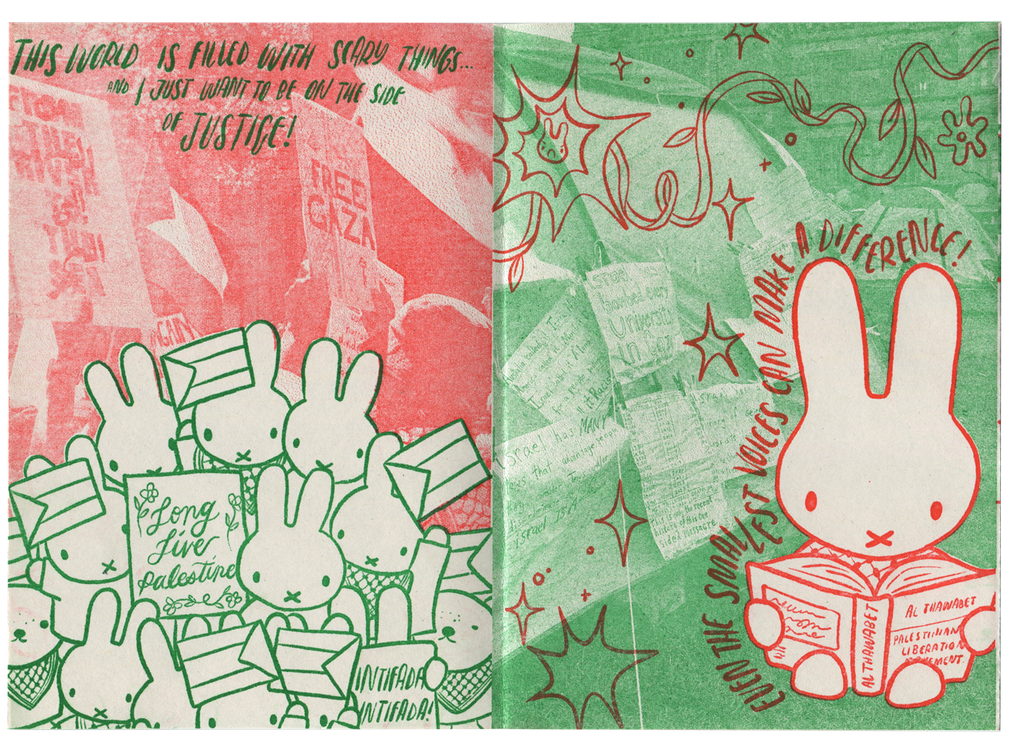
It remains to be seen whether the Australian pavilion at Venice will remain empty this year. Incense might be outlawed at the zine fair but self-publishing and small press seem healthy, at least in this small corner of the print world. Artistic freedom can and will prevail. Licensing be dammed. Palestine be free. Here’s a final word from Miffy as featured in Miffy Bears Witness a zine by Wasielah Noor available via the Goodnight Press website:
As always thank you for reading and supporting. Life has been kinda kicking my ass lately, and things have been taking longer than I’d hoped, but I have a handful of interesting and fun posts in the works. Feel free to get in touch and also to share with anyone who might be interested. I’m still not sure how to make Substack look nice but I promise I’m going to try and figure it out soon xx Kim